Fixing a Blown Fuse, Fast
A blown fuse means the switchboard has done its job. Too much current tried to move through a circuit, and the fuse broke the connection before that current could do real damage.
One blown fuse, easily reset, is rarely a drama. A fuse that keeps blowing is a different story.
Any burning smell near the board means stop reading and ring (02) 9134 9029 now.
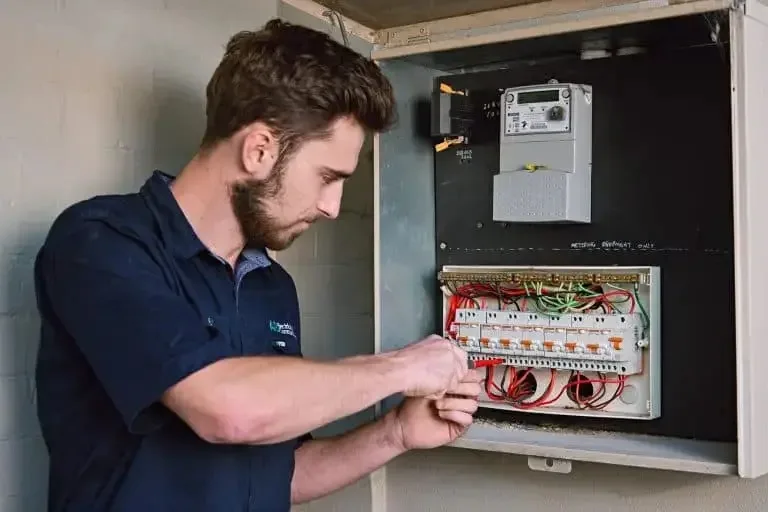
Why Your Blown Fuse Keeps Happening
A fuse contains a thin strip of metal, sized to melt on purpose the instant current on that circuit goes higher than it's built to carry.
That's a feature, not a fault. It's the same principle as a modern circuit breaker, just older and non-resettable in most cases.
A single blow, once, usually means a genuine surge, a fault appliance, or a circuit briefly overloaded by too many things running at once.
A fuse that blows again soon after replacement is telling you the overload is still there, or that something underneath is drawing current it shouldn't be.
Ceramic-fuse boards, still common in older Leichhardt homes, are more sensitive to this pattern than a modern breaker board because the fuses themselves have a narrower safe margin.
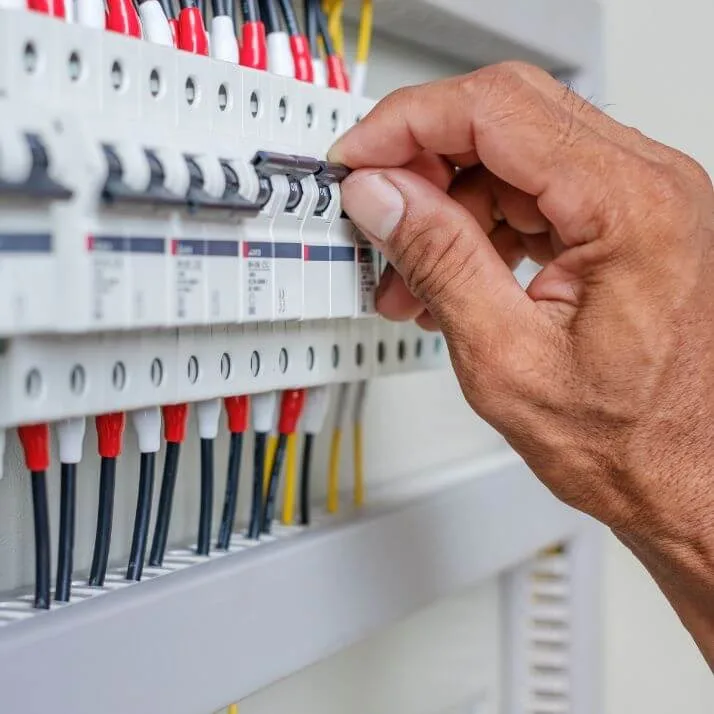
Is a Blown Fuse Dangerous?
A single fuse that blows once and stays fixed after replacement is a low-risk, routine fault.
What changes that is repetition or heat. A fuse blowing again within hours, or one that's warm or scorched around the holder, points to a fault that needs tracing properly rather than another swap.
Any smell of burning near the fuse holder is a call-now signal, not a wait-and-see one.
If the same circuit trips repeatedly with nothing plugged into it, that's a wiring issue behind the fault, not the fuse itself, and worth an urgent look.
Otherwise, a clean one-off blow is safe to book in as a normal job.
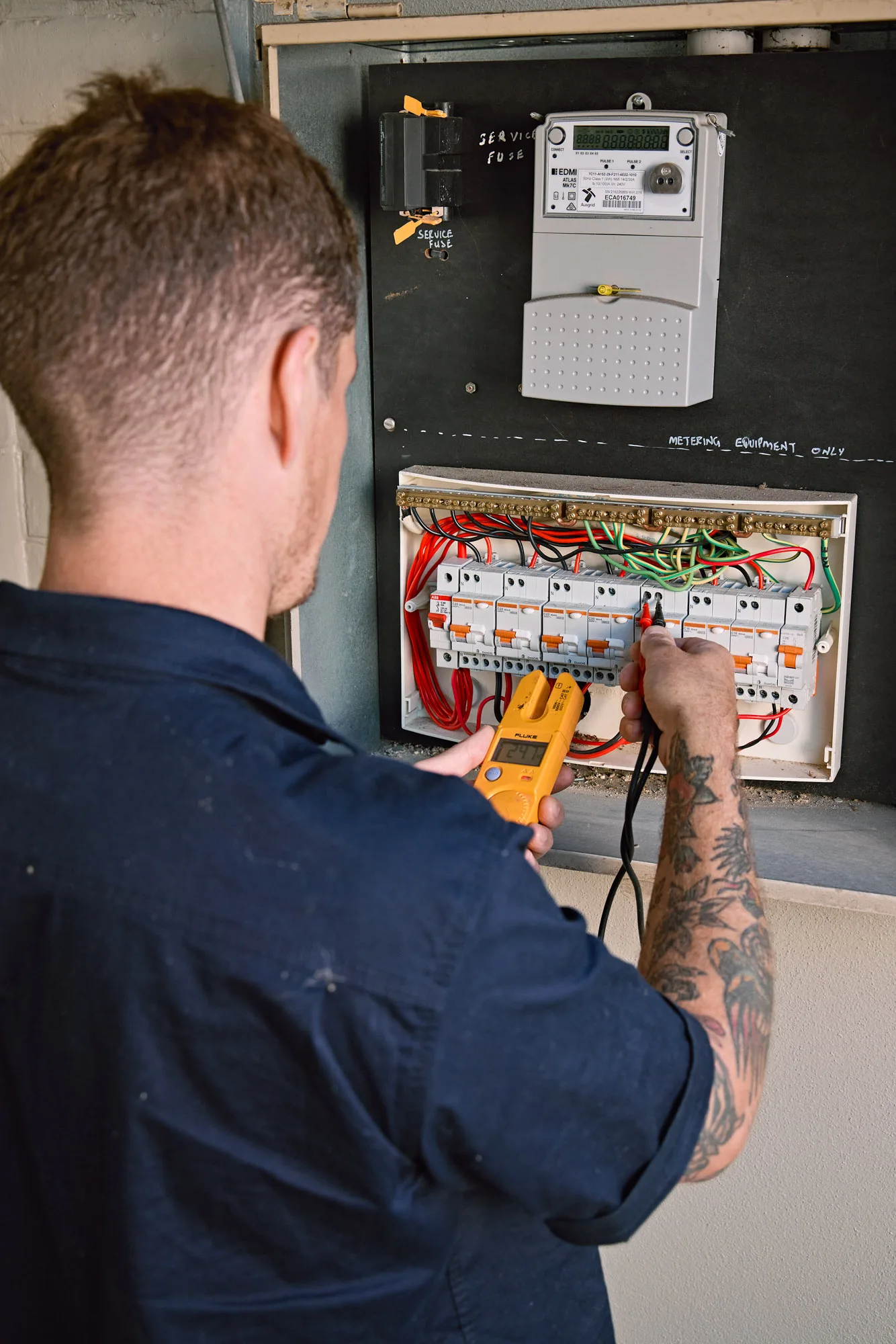
Six Causes, From Common to Rare
Worth working through in roughly this order:
- Too many appliances on one circuit. Their combined draw climbs past what that circuit was ever rated to carry.
- A single high-draw appliance. Heaters, older fridges and some power tools can trip a fuse on their own.
- A short somewhere in the wiring. Sends a sudden surge well past the fuse's rating in an instant.
- The fuse wire itself has weakened. Old fuse element can thin out over years and blow earlier than a fresh one would.
- Damp getting into a joint. Moisture briefly bridges a gap it shouldn't, spiking current through the fuse.
- A fault developing inside an appliance. Least common, but a motor or heating element failing can drag more current than the fuse allows.
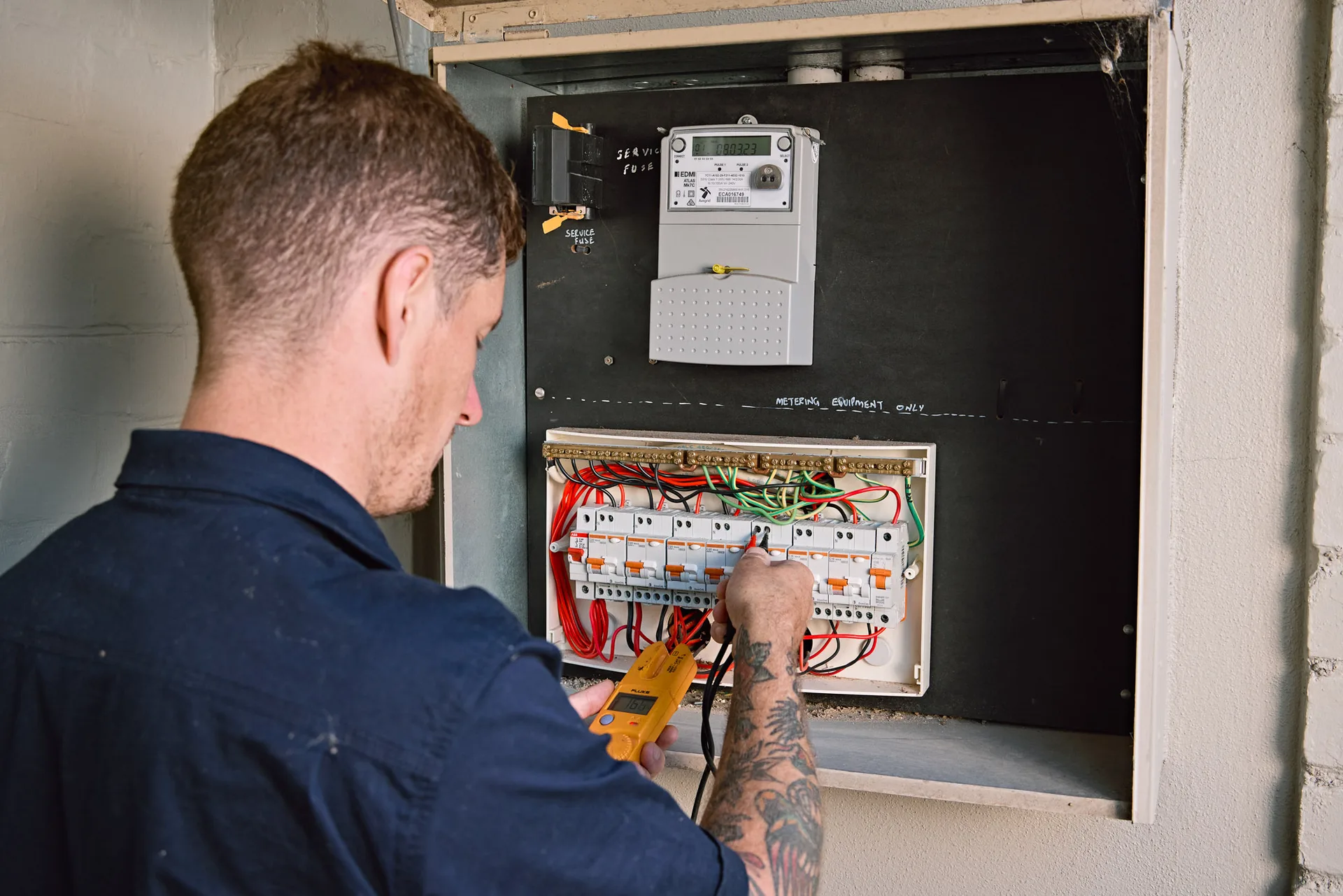
What To Do Right Now
- Turn off whatever was running on the affected circuit before touching the switchboard.
- Find the blown fuse. A snapped wire or a discoloured window in the carrier is usually the giveaway.
- Skip the DIY replacement. Fitting the wrong rated fuse is a genuine fire risk best left to us.
- Book a call if it goes again quickly. Repeat blows point to an underlying fault, not bad luck.
How We Fix and Certify the Repair
Diagnosis starts by confirming which circuit is affected, then testing for an underlying fault rather than simply swapping the fuse and moving on.
Where the cause is a genuine overload, we'll talk you through options, from spreading the load to upgrading the circuit itself.
Where the board is old enough that repeat blows are becoming routine, replacing ageing fuses with modern circuit breakers is usually the more sensible long-term fix.
Where the repair is notifiable, we lodge a Certificate of Compliance so you've got it on file that the work meets AS/NZS 3000.
Preventing the Next Blown Fuse
A handful of changes stop the same fuse becoming a repeat caller:
- Split heavy appliances onto separate circuits instead of stacking them behind one fuse.
- Move the whole board over to breakers. A switchboard upgrade trips and resets on the spot, no fuse wire involved at all.
- Add shock protection the fuse never gave you. A safety switch on each circuit covers a gap the original setup was never designed to close.
- Get the board looked at after the second blow, not the fifth. Two blows on the same fuse in a short window is a pattern, not bad luck.
A Local Angle on Blown Fuse
Norton Street runs the length of Leichhardt as its commercial spine, but step one block off it and the housing turns quickly to narrow Victorian and Federation terraces built well before modern appliance loads existed.
Fuse boards original to those terraces were sized for lighting circuits and a handful of power points, nothing like the kitchen appliances, air conditioning and charging gear a household runs today.
That gap between what the board was built for and what it now carries is a common reason a fuse on one of those side streets blows more than once in the same week.
Related Faults and Surrounding Areas
Some boards give a warning before a fuse actually lets go. If yours has started humming or clicking beforehand, that pattern is worth reading up on its own: noisy breaker box. A fuse blow that takes out the whole house rather than one circuit points to something bigger, covered separately under power outages.
Petersham, Haberfield and Rozelle fall within our normal coverage alongside Leichhardt.

Book an Electrician Today
A fuse blowing again and again deserves a proper diagnosis, not another swap. Call (02) 9134 9029 and we'll track down the actual cause and put it right.
Common questions
Common Blown Fuse FAQs
Straight answers on what a blown fuse means and what happens next.
Can I leave the fuse off overnight and sort it tomorrow?
Leaving it switched off is fine and safer than forcing a reset. Just run whatever you need from another circuit until we've had a look, rather than fitting a fuse yourself to get it working again.
What's a fair price for a fuse repair?
A single clean swap sits at the cheap end of a callout. Where the same fuse has gone twice, we quote for the extra diagnostic time upfront, so nothing lands on the bill as a surprise.
My fuse only blows when the kettle or heater is on. Is that normal?
It usually means that circuit is carrying more than it's rated for the moment a heavy appliance joins in. The fuse cutting out is it doing its job, not malfunctioning.
Can I swap the fuse myself if I've got a spare?
Don't. A wrongly rated fuse is a real fire hazard, and working inside the switchboard at all is licensed territory under NSW law regardless.
Is a fuse board worse than a breaker board generally?
Ceramic rewireable fuses were built for lighter loads than most households run now, so they tend to blow sooner under a modern appliance mix than a breaker sitting on the same circuit would.
Do you carry the fuse wire and parts on the van?
Yes, standard fuse elements and carriers are stock items on every van. If the board itself turns out to need modern breakers instead, that's a separate quote we'll walk you through on site.